
Hybrid Housekeeping Solutions: Balancing Labor Shortages and Guest Expectations
It’s first thing Friday morning, and as the head of housekeeping for a 150-room hotel, you’re face-to-face with your clipboard and an all-too-familiar sense of dread.
The weekend rush is looming, three room attendants have called in sick, and the printed room status report staring back at you is already obsolete. Down at the front desk, guests have begun trickling in, asking about early check-in, while reviews from the night before mention missing towels and delayed room readiness.
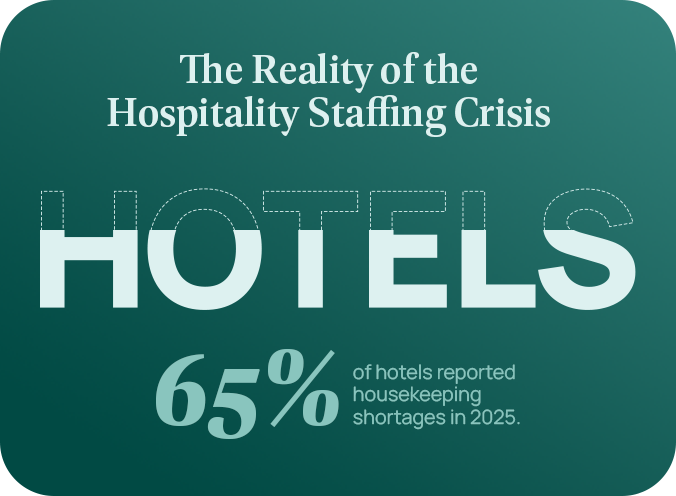
This is the reality of a persistent hospitality staffing crisis. Sixty-five percent of surveyed hotels in 2025 reported shortages, with housekeeping cited more often than any other department. And when you’re short-staffed, relying on static paper reports and radios to connect with cross-trained employees pulled into cleaning rotations can lead to communication breakdowns, unclear ownership, and eventually, burnout.
A more flexible approach to housekeeping can give supervisors the ability to adjust assignments in real time, respond to changing priorities, and maintain standards without overtaxing the team.
How Can Hotels Turn Rooms Over Faster With Fewer Staff?
Hotels can turn rooms faster by replacing paper logs and fixed morning assignments with real-time digital breakout boards that adapt as the day unfolds.
In hotels running on a traditional setup, room attendants receive a fixed list at the beginning of a shift. But when a guest requests a late checkout, another arrives early, or an employee calls in sick, that plan quickly falls apart. Housekeeping supervisors must shift priorities to track down available employees and redistribute work. Productivity drops, and the risk of impacting the guest experience becomes very real.
Digital housekeeping staffing solutions offer another option: a streamlined workflow that helps teams stay coordinated when priorities shift. These tools can give housekeeping teams a consistent way to manage inspections, track deep cleans, maintain quality standards, and adjust assignments as the day changes.
Digital breakout boards allow supervisors to distribute assignments electronically, adjust them throughout the day, and see room progress in real time. Housekeepers and inspectors receive updates directly on their devices, helping teams respond quickly to early arrivals, late checkouts, and changing staffing levels. Connected PMS integrations can also share room status updates across departments, giving the front desk better visibility into room readiness.
How Can Housekeeping Supervisors Balance Workloads Fairly?
Effective housekeeping management accounts for the effort each room requires, not just the number of rooms assigned.
A stayover refresh, a standard checkout, and a heavily used suite do not place equal demands on an attendant. When all three are treated alike, some employees finish early while others struggle through unrealistic workloads.
Digital breakout boards can be organized by time or credits, giving supervisors a more accurate way to distribute daily assignments. A hotel housekeeping management system can also provide visibility into recorded cleaning times, completed work, and productivity trends.
These insights help leaders spot uneven workloads, refine schedules, and recognize strong performance. More importantly, they support a steady pace that helps teams stay productive without pushing employees toward burnout. Real-time reports and performance tracking can also help leaders make informed decisions, address areas that need improvement, and recognize individual and team achievements.
How Can Hotels Maintain Inspection Standards While Short-Staffed?
When staffing is tight, small details can be easy to miss. This risk grows even bigger when temporary, newly hired, or cross-trained employees step in to help. Mobile inspections give you a consistent process for verifying that every room meets your property’s standards.
With customizable inspection templates, hotel housekeeping management software can guide inspectors through the same room criteria every time. Recorded scores and instant feedback help teams identify recurring issues, reinforce standards, and spot coaching opportunities.
If an inspector finds a maintenance issue, connecting the inspection process with maintenance follow-up can help keep small issues from becoming bigger ones.
For a busy department, housekeeping software for hotels makes the right process easier to follow, regardless of who completes the work.
How Do Real-Time Updates Improve the Guest Experience?
If the front desk can’t see which rooms are dirty, being cleaned, awaiting inspection, or guest-ready, they’ll need to call or radio housekeeping for answers. Each interruption pulls employees away from the work in front of them. Real-time room status connects housekeeping progress with front desk decisions, reducing uncertainty at check-in.
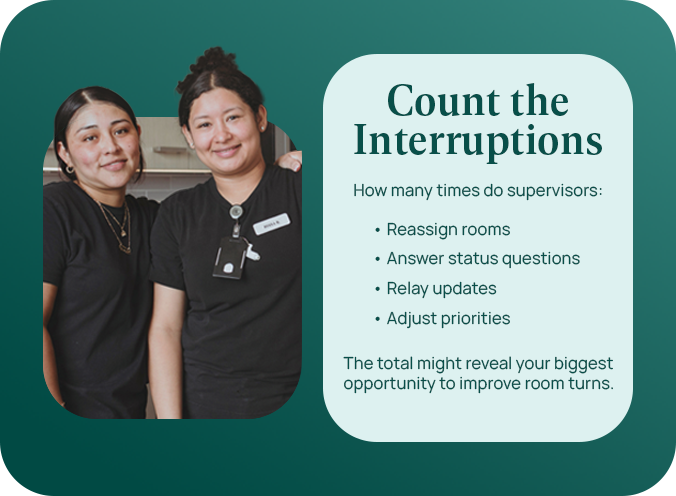
Graphic showing two housekeeping employees alongside examples of supervisor interruptions, including room reassignments, status questions, updates, and priority changes.
When occupancy and room status information sync between systems, housekeeping, the front desk, and engineering can have a shared view of room status and property activity. Front desk employees can respond to guests with greater confidence, while housekeeping can adjust priorities based on arrivals, departures, late checkouts, and special requests.
What Does a More Connected Housekeeping Operation Look Like?
The most effective housekeeping operations give lean teams greater clarity into room assignments, cleaning progress, inspections, and performance. When that information is connected, leaders have better visibility into the realities of each shift and can respond as priorities change.
The goal isn’t simply to turn rooms faster. It’s to create a workflow that helps teams understand what needs to happen, adjust when conditions change, and keep standards consistent, even when staffing is tight. Connect with Team Quore.