
The Right Way to Standardize Brand Inspections Across Properties
A hotel brand is more than a recognizable name. It’s a promise about the experience guests can expect at every property in the portfolio. A shared identity and clear standards shape those expectations, helping guests experience a consistent level of comfort and hospitality whether they stay in Nashville, Toronto, or New York.
As a regional brand leader, you guide the hotels in your portfolio as they deliver on that promise. You cannot personally oversee every inspection or operational detail, nor should you have to. Property leaders need the autonomy to run their hotels while upholding the standards that connect them to the larger brand.
The challenge comes when those standards aren't being measured the same way from one property to the next. Different inspection templates, processes, and reporting methods make meaningful comparisons difficult. Gaps can be harder to spot, inconsistencies take hold, and individual properties may interpret or apply the same brand requirements differently.
Standardization can remove those barriers without taking autonomy away from your property leaders. For brand inspections, it creates a shared framework for supporting quality assurance, brand compliance, and cross-property performance. When every property measures against the same expectations, you can compare results more accurately, spot patterns earlier, and see where a property may need additional support.
What Should Be Standardized Across Hotel Brand Inspections?
Brand inspections should standardize the expectations used to evaluate properties, along with how results are documented and reported. This creates comparable information across a portfolio without every hotel having to operate in the same way.
Consider a beachfront resort and an airport hotel. They may differ substantially, but both must represent the same brand. Standards for cleanliness, safety, asset condition, guest-facing spaces, and service delivery need to remain recognizable from one property to the next. This includes everything from hotel housekeeping standards to guest services.
The same principle applies to a standard operating procedure hotel teams are expected to follow. Property leaders need room to manage their people and respond to the realities of their individual hotels, but the standards used to evaluate brand performance need to be rooted in a common foundation.
For regional leadership, that common foundation offers better insight into inspection results because you're comparing apples to apples, not pineapples to shuttle buses. If properties measure the same requirement differently, comparing their results doesn't tell you much.
How Does Template Management Create Consistency Across Properties?
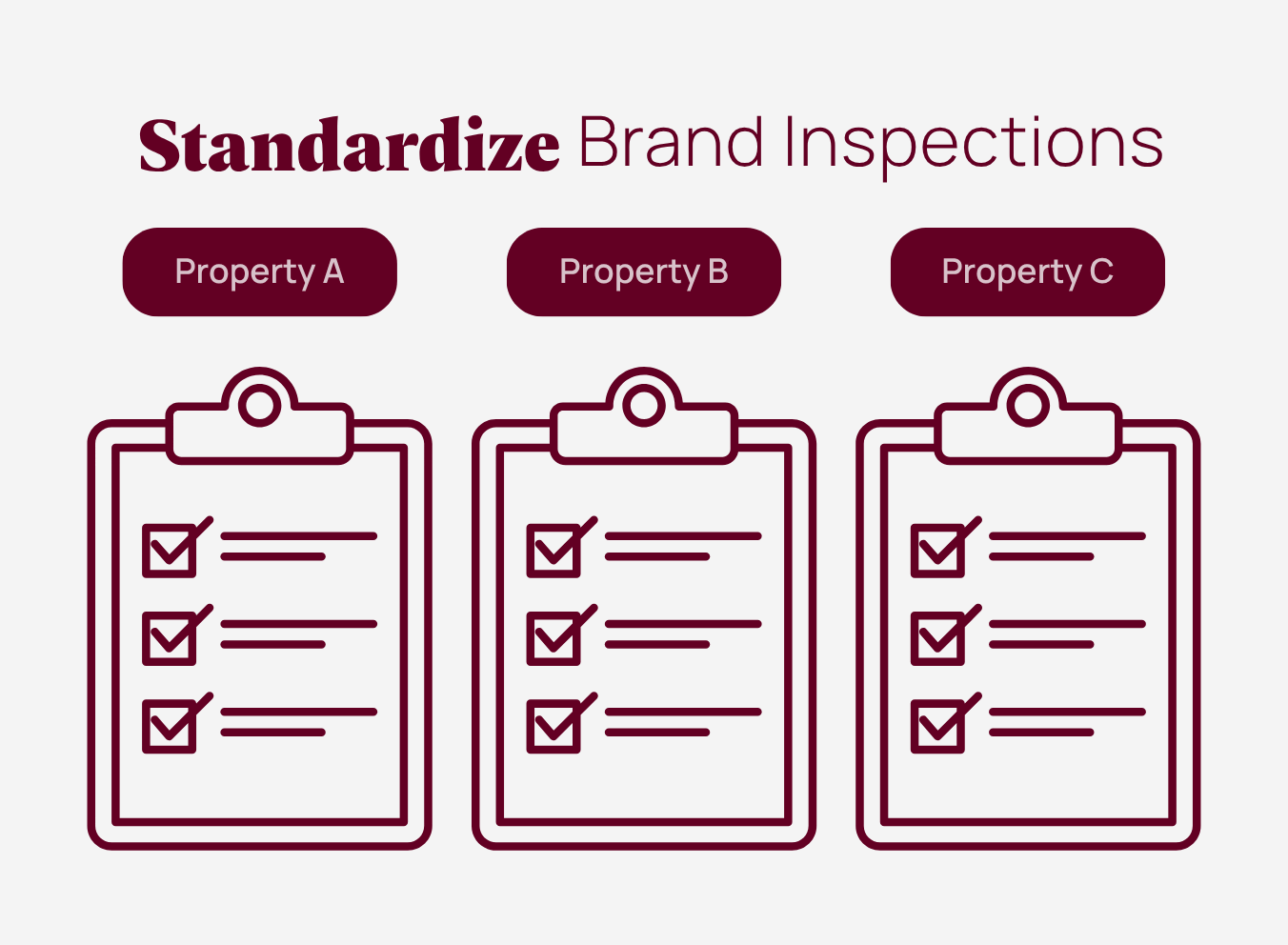
Centralized template management allows brands to turn standards into repeatable inspection processes. Instead of individual hotels creating their own versions of a checklist for hotels, brand leaders can build, edit, and duplicate digital inspection and preventive maintenance templates tailored to specific brand requirements and deploy them across properties.
With hospitality management platform Quore, customizable templates give property teams a common inspection framework while still allowing requirements to reflect the brand. When expectations change, templates can be updated - no binders or additional spreadsheets required.
For multi-property management, that creates consistency at the source. Teams know what they're expected to inspect, and regional leaders know the information coming back is based on a shared framework.
How Do Property Teams Put Standardized Inspections Into Practice?
A digital inspection application makes standardized requirements part of the work happening at each property while creating consistent information that can be evaluated across the portfolio.
When standardized policies are supported by mobile tools, hotel employees can complete inspections from their devices while moving through guestrooms and public spaces instead of being tied to a desktop.
A single digital platform can make quality management easier by putting those standards and inspection processes directly into the hands of the people responsible for carrying them out. When an inspection uncovers a problem, that information doesn't remain static. It reaches the right departments so action can be taken.
An all-in-one platform uniting tasks, teams, and tools also creates more immediate and consistent hotel data collection. Inspection information then becomes part of the operational record as teams complete their work.
What Should Happen When an Inspection Item Fails?
One of the most time-sensitive tasks within hospitality is resolving a failed inspection or inspection item. At a property where departments are siloed, someone may identify a problem during a property walkthrough and then need to make a call, send an email, or track down another department head to initiate action. Each additional handoff creates another opportunity for the issue to stall or fall through the cracks.
Within a connected system, a failed item can instantly trigger follow-up action for the appropriate department. The inspection is documented and becomes the driver for what happens next, closing an important operational gap. For regional leaders, this also creates a clearer distinction between a problem that's been identified and one that's actually been resolved.
What Can Inspection Reports Tell You Across a Portfolio?
Standardized reporting allows regional leaders to see whether inspections are happening as expected, which items are failing, and where unresolved or repeated issues may warrant closer attention.
A key feature in Quore is its capacity to generate several inspection reports, enabling portfolio leaders to drill down on troubling issues and gain a more complete picture. The Pending Inspection Items Report reveals failed items that still require follow-up. The Completed Inspections Report shows which templates were completed during a selected timeframe, including scoring information where applicable. The Inspection Summary Report can help confirm whether recurring requirements, such as weekly property walk, are being completed at the expected frequency
. The All Failed Inspection Items Report provides another perspective, showing failed items, including those that have subsequently been resolved. When more detail is needed, the Inspection Item Detail Report provides information such as the room or location, pass or fail status, who performed the inspection, notes, and photo attachments. Each of these reporting options, and more, can be exported in PDF, XLS, or CSV formats.
How Does Above-Property Visibility Help?
Above-property visibility helps regional leaders distinguish between an isolated issue, a recurring property-level problem, and a pattern that may be developing across multiple hotels.
This is where that information becomes valuable operational insight. A failed inspection item at one property may simply require follow-up. The same item repeatedly failing at that hotel may warrant a conversation with property leadership. If the issue begins appearing across several hotels, you may be looking at something that needs to be addressed at the brand level.
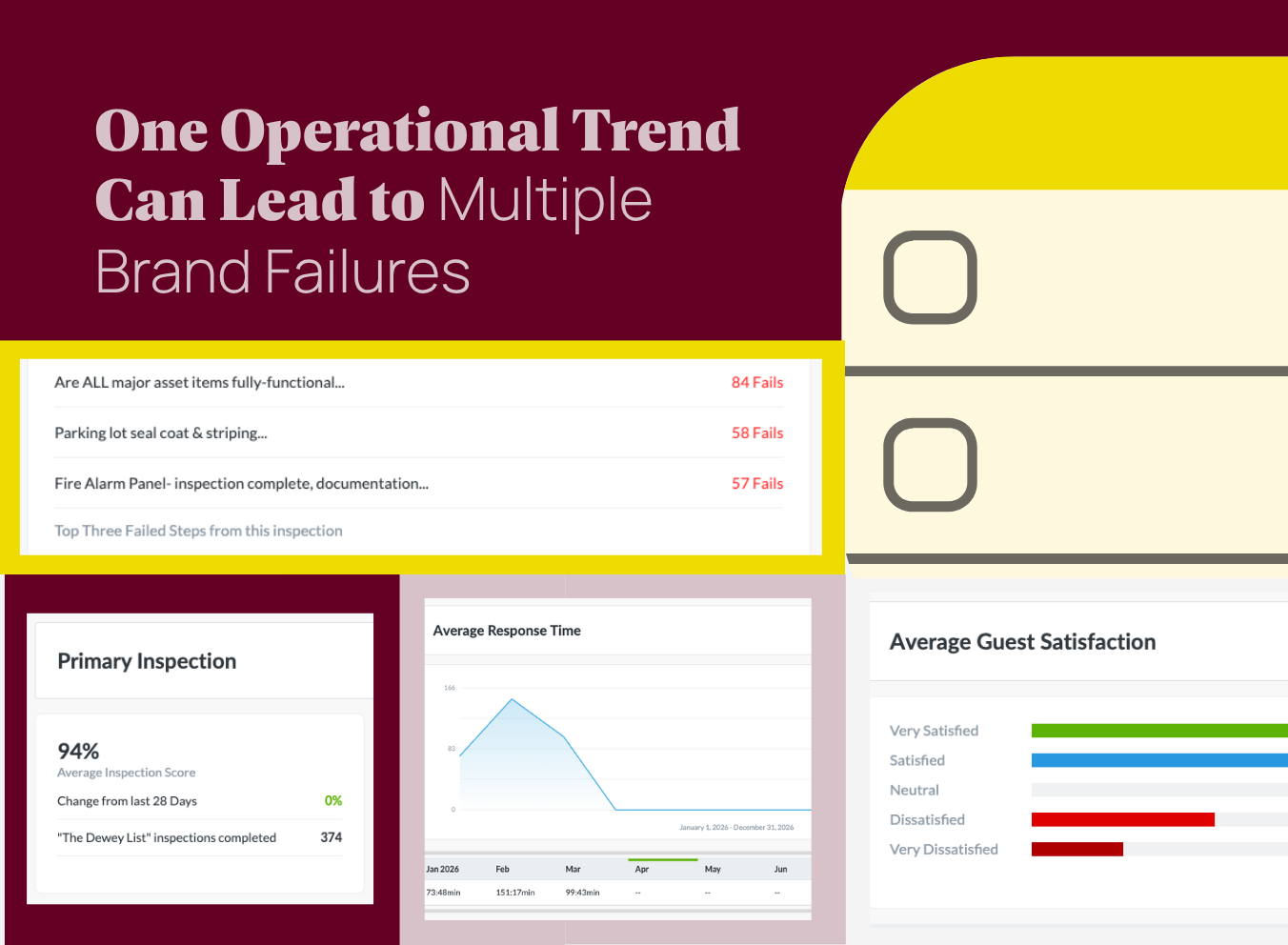
This is also one of the ways hotel operations management software can provide more value than traditional reporting systems. When inspections, follow-up work, and operational information are connected through one central platform and visible from your dashboard, you have the context to determine when your involvement can make a difference. The technology provides visibility so you can provide the leadership.
Consistency Within Your Portfolio – Let It Hum
Strong hotel brands need consistency, but consistency doesn't require rigidity. Standardized templates establish what should be inspected. Mobile functionality gives property teams a practical way to apply those standards. Connected follow-up workflows help move failed items toward resolution. And portfolio reporting shows what happened, what's still outstanding, and where repeated results may point to a larger pattern.
With a common operational foundation in place, you can support properties that need your attention while giving strong property leaders the autonomy to keep doing what works.
Standardize your operations and give every property a stronger foundation. Contact us to learn more about Quore.