
What Does “Hospitality Orchestration” Actually Look Like in a Real Hotel?
The idea that we don’t know what we don’t know can rankle the mind of any leader guiding a regional portfolio of hotels. After all, you’re expected to know it all: property pain points, staffing challenges, internal issues, external feedback, everything, everywhere, all at once.
Sure, you have GMs and operational managers tasked with keeping you in the loop, but in this industry, things move fast. Communication among leadership can take a back seat to more pressing problems at the retail level. Engineering holdups knocking a block of rooms out of inventory. Housekeeping interruptions putting room readiness behind. A baffled executive chef battling a fruit fly problem that came out of nowhere, and now the salads are off the menu. Ensuing guest complaints that could risk a poor review.
It's not that your people aren't doing their jobs. Arguably, the hardest-working individuals in any industry are found in hospitality. You’re passionate about providing exceptional guest experiences and doing whatever you can to make that happen without losing sight of your business objectives. The problem is that when important information is scattered across departments, systems, and properties, issues can slip through the cracks. By the time they reach the regional level, they could already be affecting guest satisfaction and property performance – and not in a good way.
You can’t fix systemic complications by working harder (everyone is already likely working their hardest). The trick, as they say, is in working smarter. It’s in coordinating workflows across every department so that teams are in alignment, tasks are surfaced and completed quickly, and there are no overlaps or bottlenecks in the process. It’s also about ensuring guest requests are acted upon promptly and followed up on without stalling efficiency.
The Hidden Cost of Working in Silos
Guests experience their hotel as a single entity. They’re not exposed to the controlled chaos playing out behind the scenes. All they know is whether their room was ready when promised, if it was spick and span, whether concerns with their TV were resolved promptly, and whether their stay made them feel like a VIP or a mere room number.
To leave guests raving about their experiences at your properties, dozens of moving parts need to work together.
Housekeeping needs accurate room status updates. Engineering needs to be alerted to maintenance issues without them being relayed through the line and lost in translation. Front desk teams need to balance check-ins, room readiness, and guest requests while having access to individual room rates, group rates, and more. Managers need panoramic oversight of the entire show, and regional leaders like you need a clear understanding of how every property is performing without inserting themselves into the decisions managers are tasked with making.
When departments are working on their own and effective hotel communication systems are not in place, even the best teams can miss important handoffs.
Over time, mistakes and inefficiencies create friction. Management becomes reactive rather than proactive. Inconsistencies from one property to the next create confusion among loyal guests. And for you, gaining a full understanding of how work is really flowing across your portfolio soon becomes an impossible dream.
What Hospitality Orchestration Really Looks Like
The act of preventing costly breakdowns, optimizing guest satisfaction, and ensuring profitability in perfect harmony is what it means at Quore.
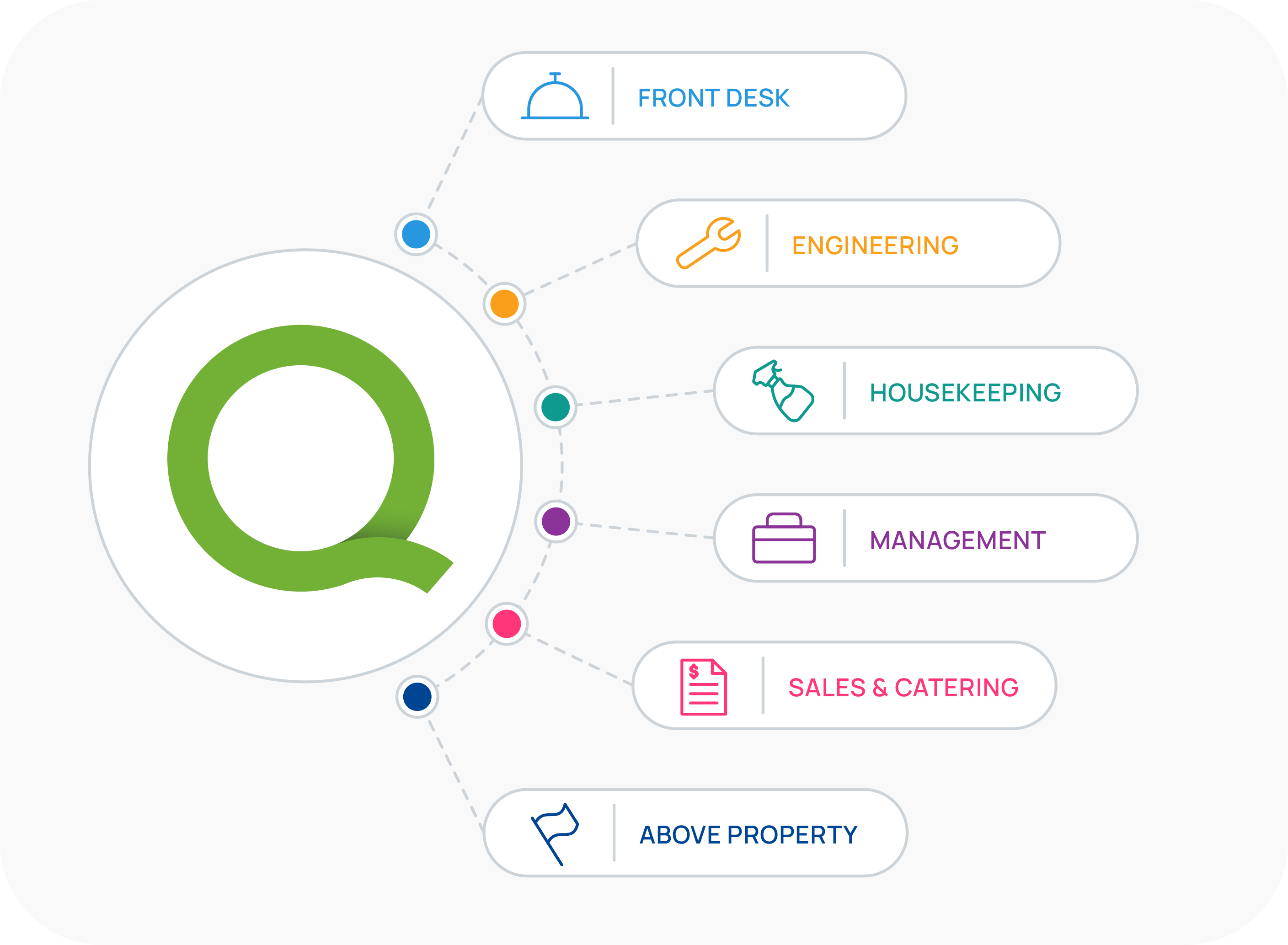
We created an all-in-one hospitality platform that connects every employee in every department to a single mobile app, putting seamless hospitality orchestration in the palm of every staff member’s hand.
At the management leadership level, Quore lets you view workflows across all properties in real time. You can step in when it matters without overstepping. Quore helps you balance consistency with autonomy so everyone can be their best. It brings consistency to the work while bringing your brand’s uncompromising standards to life.
Quore holds everything together like a conductor, ensuring your properties operate in beautiful orchestration. Operational rhythm works best when every team is moving from the same score.
Hospitality orchestration is the process of connecting people, workflows, and information so that operations move smoothly across departments and properties. It's true Hospitality Workforce Management.
A guest checks out. Housekeeping is pinged. The room is promptly attended to. An inspector verifies that it meets the required standards. Front desk can see progress in real time. If an issue is discovered, engineering is notified. They handle the situation, document the fix, post a picture of the working unit, and everyone involved gets a notification. Everything happens on Quore, without emails, calls, Post-its, or chasing down staff members. As a result, your teams spend less time managing processes and more time attending to guests and improving hotel productivity.
What Traditional Hotel Operation Reports Miss
You already have access to performance reports. You can see occupancy rates, ADR, RevPAR, GOPPAR, and other KPIs. Your metrics tell you what’s happening, but they can’t tell you why.
Thousands of operational decisions occur every day that influence property performance, and if this information exists in separate systems and spreadsheets, you’re left looking at outcomes rather than opportunities.
This is where the right hotel operations software can fundamentally change the way you manage your portfolio, and when Quore becomes your new best friend.
Reports tell you what happened. Visibility helps you understand why.
When work orders pile up at one property, inspections fall behind at another, or room readiness starts slipping across a region, patterns become easier to spot before they affect performance.
GMs and portfolio managers can run real-time reports on performance metrics like response and completion times, number of work orders and fulfilled guest requests, missed inspections, and preventative maintenance routines.
Portfolio managers can see if corporate templates are being used and which properties are consistently complying with the brand standards.
More human. More operational. More Quore.
Hospitality Software Solutions That Keep Work Moving
Modern hospitality software should help everyone understand how their work contributes to the bigger picture, and Quore is at the forefront of this technology.
This layer of orchestration helps connect departments through shared workflows, real-time communication, and operational visibility. That's what hotel effectiveness looks like at scale.
Reduce guest complaints, improve guest satisfaction scores, boost employee morale, and increase retention simply by removing friction for better flow.
Property and portfolio leaders don't need more complexity. They need confidence in how work is flowing across every property.
When teams are connected, standards become easier to maintain, issues become easier to spot, and guests experience the consistency your brand promises.
That's the difference between operating hotels and orchestrating hospitality. The difference can be heard in the quiet rhythm of real hotel work.
Get in touch to get started.