Three Reasons Hotel Preventative Maintenance Programs Quietly Fail
As head of maintenance and engineering, you run a tight ship. You have a preventative maintenance program in place that usually catches problems before they snowball, and most days, everything stays on track. With routine inspections and servicing, you do everything possible to keep guestrooms comfortable and prevent maintenance issues from disrupting a relaxing stay.
But experience has also taught you never to take an uneventful stretch for granted. That is usually when Murphy’s Law seems to kick in.
As if on cue, you get the call: the bathroom floor in room 2301 is flooding, apparently due to a leak beneath the sink. If your team can’t stop it quickly, water could reach the floor assembly and damage the ceiling in the room below it. Both rooms might need to be taken out of inventory, and with the hotel at 100% occupancy, two sets of guests could have to be relocated to another property at your hotel’s expense. Add emergency plumbing, water extraction, repairs, and lost room revenue, and a single missed replacement could become an expensive disruption.
The culprit, it turns out, was an aging supply hose. It finally burst. You recognize it immediately because you’d flagged it during your most recent inspection, along with several others showing signs of wear. But the replacements had not been scheduled, and no one else on the team appeared to know they needed attention.
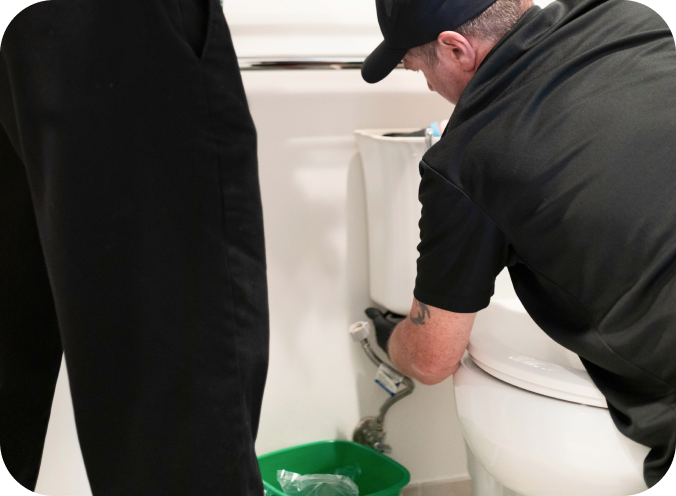
You shut off the water, radio for a braided stainless-steel replacement line, and hope there’s still one in inventory. Then you ask the technician working with you whether the deteriorating hose had appeared on their task list. It had not. The inspection had identified the problem, but the next step had never become a visible, assigned task.
Inspections were taking place as scheduled, with focused attention to detail. Your rigorous standards identified the aging bathroom hose in the first place. But the preventive maintenance process still failed.
Successful hotel maintenance depends on more than scheduled inspections; it requires clear task ownership, complete asset records, and shared visibility of issues so your team can act. That connection between identification and follow-through was missing. Even with a well-designed PM program, tasks can be missed, preventable disruptions can occur, and teams can end up reacting to problems that earlier inspections had already uncovered.
How Do Preventive Maintenance Tasks Get Missed?
Preventative maintenance tasks are often missed when schedules, staffing demands, and daily work orders compete for your department’s attention. If every task isn't clearly assigned and tracked through to completion, work can fall through the cracks.
During peak periods, high occupancy can make guestrooms harder to access, making planned work more difficult to complete. High occupancy can also mean greater use of equipment, more guest requests, and more issues reported as housekeeping moves from room to room. With a flurry of immediate repairs taking up much of your workday, preventative maintenance can get sidelined.
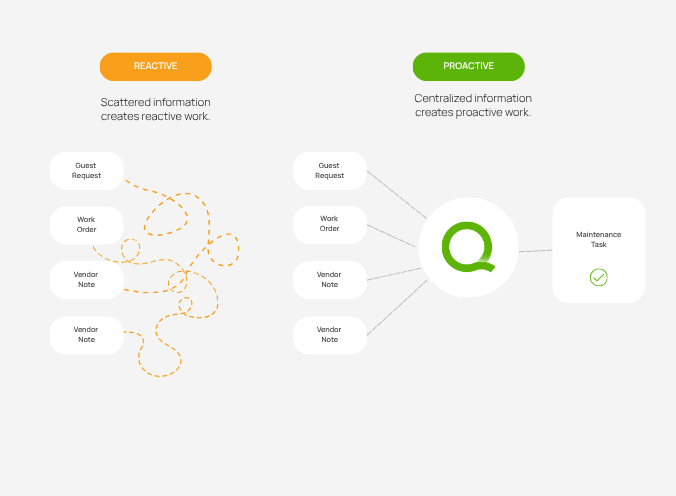
Everyone is doing their best to log and track what needs immediate attention and what can wait. Still, a pileup of verbal reminders, sticky notes, and disconnected spreadsheets makes it hard to see who owns each task and whether it's being completed.
A shared maintenance system can help close this communication gap. In Quore, teams can schedule recurring PMs, see completed and outstanding work, and review maintenance records in one place. When an inspection item fails, it can result in a Task or Work Order that the team can track through completion.
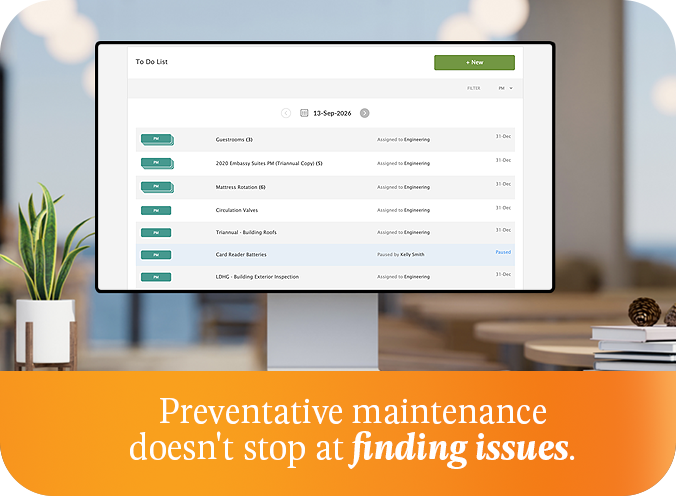
Hotel maintenance task list showing scheduled preventative maintenance work assigned to engineering, with a reminder that identifying issues is only the first step.
What Happens When Hotels Can’t Track Their Assets?
When asset records are incomplete, maintenance teams can’t readily assess an item’s age, condition, repair history, or upcoming requirements. That makes it harder to spot patterns and support informed repair and replacement decisions.
Maintenance teams need visibility into previous work and flagged issues to form a clearer picture of the property’s condition. Without that history, each shift may begin without the full context behind recurring problems. A shared maintenance system connects records across its PM, Inventory, Work Order, and Readings tools, including work-order history associated with individual assets.
A complete maintenance record gives technicians more context when they encounter an issue. Preventative maintenance schedules show what has been inspected and when, while asset records provide details about individual equipment and its repair history. Work orders document the problems that have already been reported, and regular readings can provide another record of equipment and property conditions over time.
The goal is to connect those records rather than leave important information scattered across separate systems, spreadsheets, or individual team members. When maintenance teams can look back at what has been inspected, repaired, or repeatedly flagged, they have better context for deciding what needs attention next.
With a connected hotel maintenance management system in place, you can identify recurring problems, review repair history, and use that information to support repair or replacement decisions. Issues are less likely to remain isolated on a sticky note or in someone’s memory.
Centralized records can help maintenance teams keep asset information and open work visible. Zdravko Bengez, a maintenance technician at a Hilton Garden Inn in downtown Nashville, described the practical value this way in HotelTechReport: “With Quore, I know in seconds what needs to be done.”
What Is the Impact of Reactive Maintenance in Hotels?
Hotels can slip into reactive maintenance mode when urgent requests repeatedly push preventive work aside. Over time, maintenance teams spend more of each day responding to breakdowns and less time preventing them.
High occupancy can put more immediate work in front of the maintenance team, while disconnected communication between departments creates another challenge. Housekeeping may report a recurring issue, the front desk may receive a guest complaint, and engineering may complete a temporary repair, but unless those activities are connected, the underlying issue may never surface until it becomes an emergency.
Connected maintenance software can help by bringing PM schedules, asset histories, and work orders into a shared workflow. When housekeeping, the front desk, and engineering are working from the same information, reported issues and follow-up are easier to track across departments. That shared visibility also makes it clearer what has been addressed and what still needs attention.
Connecting the Three Parts of Preventative Maintenance
A preventative maintenance program should give the team confidence that identified work will be assigned, tracked, and completed. That requires three connected pieces: clear task ownership, reliable asset records, and shared visibility across departments. The goal isn’t simply to document the work. It’s to make sure an issue identified today becomes a clear next step for the person responsible for addressing it.
Explore more resources for keeping preventative maintenance work organized, visible, and on track. Connect with Quore.