
The Hidden Cost of Deferred Maintenance in Hotels
Hotel maintenance and engineering managers know their properties the way a mechanic knows a car. After a few years, you can almost predict what will soon need attention. An HVAC unit that suddenly needs another service call or a pipe stack that’s seen its share of repairs. As the person responsible for keeping the property running, you learn to recognize the warning signs long before anyone else notices them.
The trouble is, knowing about a recurring problem and having the time, budget, or information to fix it properly aren't always the same thing.
One morning, you're halfway through breakfast when you hear that plumbing issues have broken out across three different floors. Front desk was the first to find out. Your shift hadn't even started, so you missed the initial calls. The moment you hear the first room number, you already know the likely culprit: the same vertical pipe stack that was temporarily repaired the last time this happened.
Now you're pulling maintenance history, comparing previous repairs, assigning technicians, and coordinating work across occupied guestrooms, and all of it because a temporary fix became this day’s emergency. It's a familiar cycle, and one that illustrates the difference between deferred hotel maintenance and a proactive, preventive approach. With the right maintenance software providing better visibility into asset history, recurring issues, and scheduled work, engineering teams have a better chance of addressing problems before they escalate. Deferred maintenance can consume engineering resources, disrupt operations, shorten asset life, and eventually reach the guest experience. By then, the property is paying far more than the original repair would have cost.
What Happens When Hotel Maintenance Is Deferred?
Delaying necessary repairs and equipment maintenance can create a backlog of overdue tasks that become larger, more disruptive problems over time. While deferring a repair may initially save time or money, it can ultimately result in more expensive, time-consuming repairs and unexpected equipment downtime.
And as the head of engineering, you’re not just repairing what's broken on any given day; you’re also staying ahead of dozens, if not hundreds, of assets that all require regular inspections and service. This means that every unexpected repair pulls your technicians away from scheduled preventive maintenance, setting you even further behind. Over time, a reactive cycle like this can impact more than your own department. It can extend across the property, eventually impacting your guests.
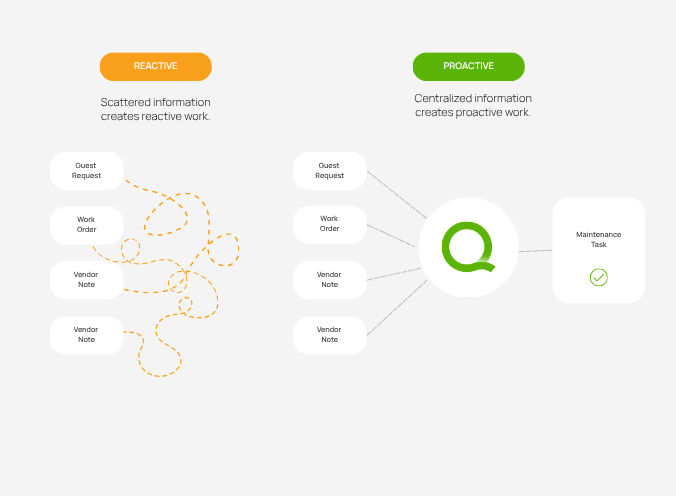
Breaking that cycle begins with better visibility into past issues, better communication between departments, and a more synchronized approach to addressing and resolving problems. The right hotel maintenance software makes that visibility possible by bringing work orders, maintenance history, and asset information together in one place. When you and your team have a clear view of the property’s equipment, appliances, technologies, and other assets, along with their maintenance history and any work that still needs to be completed, you can address small issues right off the reel, before they develop into protracted repairs that result in disgruntled guests.

Asset Tracking Keeps Engineering Teams Nimble
When you’re brought in to repair a piece of equipment, you shouldn’t have to wonder if it’s a one-off or has happened before.
But with maintenance records in different binders, and requests from different departments buried in back-to-back emails, valuable information and accompanying context gets lost.
If, on the other hand, you have a centralized digital platform housing the history, you and your team can spend less time tracking down answers and more time solving problems.
Asset tracking accomplishes that. A centralized hotel maintenance management system gives your engineering teams instant access to maintenance history, recurring issues, on-demand photos of the equipment in question, and insights into previous repairs, allowing them to make informed decisions rather than starting from scratch time and again.
A comprehensive management system brings all that information together into one dashboard and makes it shareable across digital devices, so staying on top of issues that come out of nowhere and staying on the same page as your colleagues is simple.
Proactive Hotel Maintenance Management Creates a More Predictable Day
The goal in hospitality is to ensure your guests feel pampered and important, and that they enjoy an incredible stay. Everyone is already working toward that goal because this industry attracts people who enjoy going above and beyond in their roles for the benefit of others. To this end, Hotel operations must run so smoothly that guests never notice the work happening behind the scenes.
Hotel preventive maintenance software makes it easier to keep tasks on schedule, assign work, monitor completion rates, and ensure important inspections aren't overlooked.
Connected Work Orders Keep Everyone on the Same Page
Engineering does not work in isolation. On the contrary, every issue has the potential to affect all other departments and ultimately the guest experience. But when engineering, front desk, guest services, housekeeping, and management are all working from a centralized platform and can communicate with each other through instant notifications, operations go from disconnected and chaotic to harmonized and humming.
Uniting the front desk, housekeeping, engineering, and management on one dashboard can help turn playing catch-up into the rhythm of real hospitality. Using preventative maintenance software that integrates with the rest of hotel operations helps work flow smoother, and teams grow stronger. Consequently, guest requests are surfaced, addressed, and resolved faster. And when your teams are in sync, your guests feel the difference.
For engineering, hotel work order software serves as a primary hub that keeps information visible and all departments aligned. Instead of the front desk learning from a guest about faulty air conditioning and having to chase down their colleague because no one’s responding on the walkie-talkie, they can send a quick notification. Instantly, the right person is alerted; they signal they’re on it, and they can send a photo of the equipment before work begins and again once it’s completed. When the issue is resolved, it’s closed out.
Maintenance software for hotels helps maintenance teams stay more organized, more proactive, and less disruptive to daily operations. Housekeeping knows when it's safe to clean the room. Front desk teams are alerted the moment rooms are available.
Staying Ahead of Maintenance, One Issue at a Time
No engineering manager starts the morning hoping to talk surprise plumbing issues over coffee and pastries. When information is mobile, teams can check their apps on the way into work and get a clear picture of what’s happening in real time, at the right time.
Hotel facilities management software keeps your team connected so maintenance happens as it should, assets are tracked throughout their lifecycle, and issue response times improve. Great maintenance rarely gets applause. That’s the point. When engineering can see what needs attention and act before a small issue becomes a guest issue, the building simply works.
To learn more about Quore’s preventative maintenance solutions, visit our Engineering solutions page or contact us.

