The Future of Hotel Operations Software: Trends to Watch in 2027
Technology can seem impersonal, especially in an industry as people-oriented as hospitality, but when it helps teams coordinate work and respond to guest needs, it can support the personal service hospitality is known for.
As the general manager of a busy hotel, you’ve seen how technology can help teams work more efficiently and respond to guest needs. As industry technology advances, it’s worth considering how your property management system (PMS) works with the other tools your team uses every day.
Hospitality technology isn't meant to replace the people delivering the service; it’s meant to support their work. Research from Deloitte reports that 81% of hoteliers prioritize increasing employee productivity as a technology initiative. Meanwhile, 80% of hotels still dedicate the equivalent of one to two full workdays every week to producing or analyzing spreadsheets.
For 2027, the opportunity is to connect technology more closely with daily hotel operations. Here are the developments worth watching and what they could mean for your property.
How Can PMS Integrations Connect Hotel Work Property-Wide?
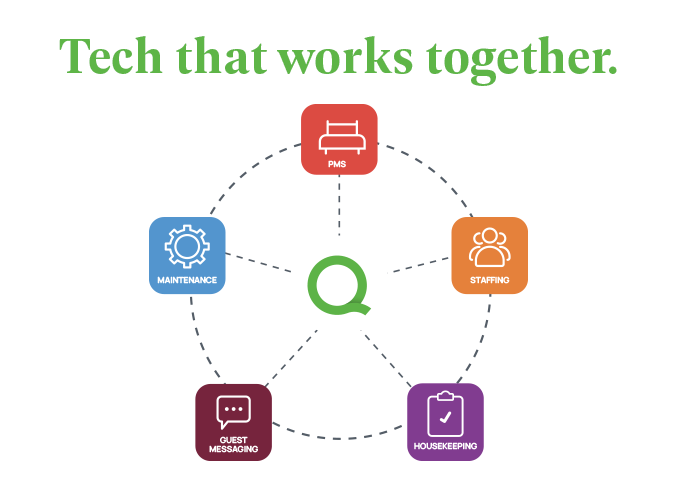
Despite the growing use of hotel technology, it’s easy to find yourself tied to Excel. When your PMS, housekeeping, staffing, and guest services platforms don’t share information, you may need to export and manually merge data into spreadsheets. This can create information silos and make it harder for departments to coordinate their work.
A connected hotel management platform can help teams bring information into their daily workflows and make it easier to see who needs to act. Quore’s integration resource lists supported PMS and guest messaging connections that can help connect guest information with the work teams need to complete.
Where Does AI Fit Into Hotel Operations?
For some, artificial intelligence (AI) can feel impersonal. But when used thoughtfully, AI can help with routine tasks and give hotel teams more time to focus on guest needs and the work that requires human judgment.
For example, a guest might ask housekeeping for fresh towels and mention that the bathroom sink is draining slowly. One conversation, two departments that need information. The towel request belongs with housekeeping, while the slow drain needs maintenance attention. Connected workflows can help route each issue to the appropriate team. AI integrations may reduce some of the manual work involved in capturing and routing requests, depending on how the systems are configured.
Through Quore’s integration with VSR, guests and staff can use natural voice conversations to submit requests directly into the operations platform, where requests are automatically categorized and routed to the appropriate department. This reduces the need for employees to record and relay requests manually.
Text messages offer another example. The Canary integration with Quore connects guest messages with hotel operations. Guest requests can be turned into service requests or work orders and routed to the appropriate team. When a message includes separate needs, such as extra towels and a maintenance issue, each request can be tracked as its own task, helping teams coordinate the work and keep the front desk informed of progress.
Automation can also support follow-up. A rule set by the hotel might automatically notify a supervisor when a request remains unresolved beyond an agreed response window. This type of automation doesn’t require AI. For the alert to be useful, someone needs to own the follow-up and know when to step in.
AI can help move information from a guest request into a team's workflow, reducing some manual handoffs and data entry. As you evaluate your technology for 2027, consider where these connections could reduce manual work or make handoffs clearer.
How Predictive Maintenance Helps Your Team
By using equipment data and analysis to identify patterns, predictive maintenance can help identify signs of a developing problem. While preventative maintenance helps keep equipment operating reliably, a pipe about to burst does not announce itself. Predictive maintenance uses equipment condition data to help determine when an asset may need attention.
Sensors can monitor factors such as vibration or temperature, while analysis identifies changes that may indicate a problem. Where appropriate monitoring is in place, this technology can give your team an earlier opportunity to assess equipment and plan repairs before a failure disrupts hotel operations.
When comparing software, distinguish equipment monitoring and predictive analysis from recurring maintenance reminders. Both can support maintenance planning, but they serve different purposes.
How Can Mobile Software Support Teams Throughout the Property?
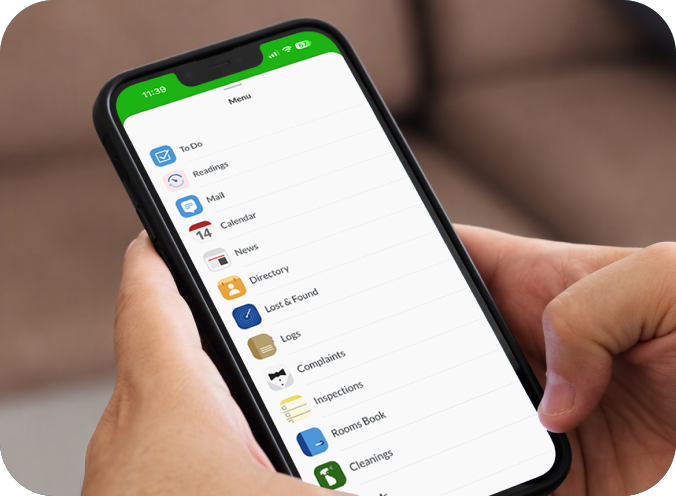
Systems that require employees to return to a workstation or radio another department to report an issue can slow down the handoff. Mobile solutions let staff submit requests, attach photos, and update task status wherever they’re working, helping the responsible department receive information sooner.
Mobile hotel operations management can also help teams to follow an open task through to completion. A staff member in the maintenance or engineering department can see the assignment, act on it, record progress, and update the task so other departments can see when the issue is resolved.
These tools need to be practical during a busy shift, with clear navigation and straightforward workflows. Consider whether connecting work across departments could improve communication and task follow-through, and find out how staff will be trained.
Quore University provides role-specific learning paths that help hotel staff learn the tools relevant to their roles. Staff can complete training at their own pace, while managers can track their progress and certifications.
Choosing a Hotel Management Product Suite That Fits Your Property
As you plan for 2027, start by identifying where work repeatedly slows down. When evaluating hotel management software, look for the causes of those bottlenecks. Are guest complaints taking too long to resolve? Are you spending too much time chasing updates?
Ask providers to demonstrate those situations, including the handoffs between departments. Compare the work required, the information available, and the support employees will need.
The most useful software gives your people an easier way to deliver the service that reflects your hotel’s standards. The goal is a clearer view of daily work, more reliable handoffs, and more time for your team to focus on guests. Connect with Quore.